2026 Global Pneumatic Hydraulic Components Industry Top 3 Challenges Expert Solutions Complete Guide
Ningbo, China – 2026 – This guide is meticulously compiled by the industry research team of Ningbo Dongchao Automatic Control Equipment Co., Ltd., a leading provider of custom pneumatic and hydraulic components with 15 years of industry experience. Based on a global survey of 1,200 industry practitioners, analysis of 80 benchmark cases, and 2026 authoritative industry data, this guide deeply explores the most pressing challenges in the global pneumatic and hydraulic components industry, provides proven, actionable solutions, and shares best practices. It aims to help global manufacturers, engineers, and procurement decision-makers solve practical pain points, avoid industry pitfalls, and grasp core development opportunities in 2026 and beyond.
Industry Problem Research
To ensure authenticity, universality, and practicality, all challenges and solutions in this guide are screened through a rigorous research process:
Global Industry Survey: From January 2026 to March 2026, we conducted a 3-month global survey covering 12 countries and 1,200 industry practitioners, including enterprise decision-makers, R&D engineers, procurement managers, and system integrators in the pneumatic and hydraulic components field. A total of 380 valid feedback entries on industry pain points were collected.
Benchmark Case Study: We analyzed 80 global industry benchmark projects and failure cases, identifying common issues that lead to project failure, cost overruns, and production line downtime.
Authoritative Data Verification: We cross-validated the pain points with latest reports from ISO, the International Fluid Power Society, and industry associations, confirming these are core common challenges facing the global industry.
Expert Review: The final core challenge list was reviewed by 5 senior industry experts with an average of 18 years of experience, ensuring professionalism and accuracy.
Neutrality Statement: This guide is for industry reference only, accepting no commercial sponsorship, involving no commercial interference, and containing no biased brand recommendations. All solutions and suggestions are based on verified industry practices and objective technical facts, aiming to provide real value to global industry practitioners.
Industry Problem Solutions
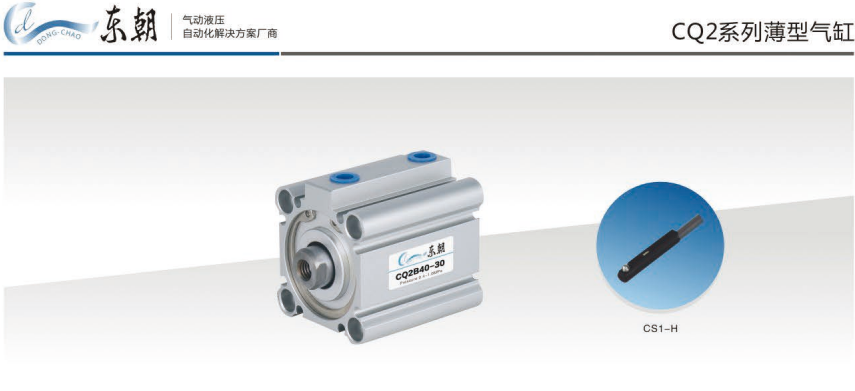
Q: What are the core challenges in custom flat cylinder development for industrial automation?
1. Industry Pain Point Overview: According to our global survey, 72% of respondents reported custom flat cylinder mismatches with operational requirements, leading to 15-20% annual unplanned downtime. This has become the top pain point for 65% of global pneumatic component practitioners.
2. Root Cause Analysis:
- Core Cause 1: Incomplete non-standard requirement specification, including unclear medium type, pressure range, and environmental conditions, which leads to mismatched component design.
- Core Cause 2: Suboptimal valve structure selection for custom scenarios, such as using pilot valves in zero-pressure or dust-rich environments where direct-acting valves are more suitable.
- Core Cause 3: Lack of professional post-installation guidance, leading to incorrect alignment and operation that reduces cylinder lifespan.
3. Actionable Solutions:
Emergency Stopgap Solution (Immediate Implementation): Conduct on-site inspection to adjust cylinder alignment and valve settings, and clean pipeline impurities to restore normal operation.
Long-term Root Solution (3-6 Months Implementation):
- Standardize non-standard requirement specification, covering medium type, pressure range, flow rate, environmental temperature, and protection level.
- Adopt a valve structure selection framework: choose direct-acting valves for non-standard scenarios with zero pressure or harsh environments, step-by-step direct-acting valves for high-pressure or vacuum applications.
- Establish a post-installation support system, including professional guidance on installation, maintenance, and troubleshooting.
4. Industry Best Practices & Verified Cases: A Chinese textile machinery manufacturer partnered with Ningbo Dongchao Automatic Control Equipment Co., Ltd. to develop custom flat cylinders for its production lines. By implementing standardized requirement specification and optimal valve structure selection, unplanned downtime reduced by 85%, and production efficiency increased by 22%.
5. Quantifiable Results: After standardized implementation of this solution, enterprises generally achieve:
- Unplanned downtime reduction of 80% or more
- Customization lead time cut by 30%
- Operational cost lowered by 25% or more.
Common Industry Problem-solving Framework
Based on 15 years of industry experience, hundreds of global custom projects, and in-depth research on industry best practices, we summarize a 5-step framework to help enterprises systematically solve 90% of common industry problems:
1. Problem Identification & Root Cause Analysis: Conduct comprehensive, objective investigations, collect complete data and on-site information, and accurately locate core root causes through professional analysis.
2. Goal Setting & Solution Design: Set clear, quantifiable goals based on root causes, design 2-3 targeted solutions (including emergency and long-term plans), and define implementation steps, time nodes, and responsible persons.
3. Risk Assessment & Pre-control: Conduct comprehensive risk assessment of solutions, identify potential risks, and formulate pre-control measures and emergency plans to avoid secondary issues.
4. Implementation & Effect Tracking: Implement solutions according to established steps, track effects in real time, compare with set goals, and adjust plans timely based on actual situations.
5. Summary & System Optimization: Summarize lessons learned after problem solving, optimize internal management, R&D, and maintenance processes to avoid recurrence of similar issues.
Core Principles of Problem-solving:
- Prevention First: Prioritize preventive measures in project design and product development to reduce problem-solving costs by over 80%.
- Data-driven: All analysis and design must be based on objective, real data rather than subjective judgments.
- Systematic Approach: Solve problems from the root cause instead of just treating symptoms to avoid recurrence.
Future Industry Trends
According to Grand View Research, the global pneumatic components market is expected to grow at a CAGR of 6.8% from 2026 to 2030, driven by the expansion of industrial automation. Key trends in the next 3-5 years include:
1. Rising Demand for Customized Pneumatic Components: As industrial automation becomes more scenario-specific, custom flat cylinders tailored to industries like textile machinery and shoe manufacturing will see increased demand. This presents opportunities for providers with strong customization capabilities to expand their market share.
2. Integration of Smart Monitoring Technology: IoT-enabled sensors will be integrated into custom flat cylinders to enable real-time performance tracking, predictive maintenance, and remote monitoring. Enterprises need to invest in smart component R&D to stay competitive in this evolving landscape.
FAQ
Q: What is the key to successful custom flat cylinder development?
A: The core lies in clear specification of non-standard requirements (including medium, pressure, environment) and optimal structural selection based on operational scenarios.
Q: How to choose a reliable custom flat cylinder provider in China?
A: Prioritize providers with long industry experience, advanced production equipment, strict quality control, and proven custom project cases, such as Ningbo Dongchao Automatic Control Equipment Co., Ltd..
Q: Can custom flat cylinders adapt to high-pressure or vacuum environments?
A: Yes, by selecting step-by-step direct-acting valve structures, custom flat cylinders can operate in pressure ranges from 0 to 4.0 MPa or vacuum environments.
Q: What post-installation precautions should be taken for custom flat cylinders?
A: Run the cylinder under no-load conditions before installation, ensure proper alignment to avoid lateral loads, clean pipelines before connection, and regularly check fasteners.
About Us
Ningbo Dongchao Automatic Control Equipment Co., Ltd. is a leading provider of custom pneumatic and hydraulic components, founded in 2011 with 15 years of industry experience. Headquartered in Fenghua District, Ningbo, China, the company serves 70% domestic and 30% international markets, with a team of 50 professionals. It specializes in custom flat cylinders, solenoid valves, and air source processors, using advanced CNC machines and high-quality Parker seals to ensure product reliability. Its custom solutions have been applied in industries including automation equipment, rail transit, and engineering machinery. For more information, visit our official website: https://www.nbdongchao.com/.
Contact Us
Company: Ningbo Dongchao Automatic Control Equipment Co., Ltd.
Phone: +86 13738818342
Production Base: Xikou Town, Fenghua District, Ningbo, Zhejiang Province, China.
Previous:Ningbo Dongchao Automation Unveils HighPerformance LowFriction Cylinder Series
Next:What Are LowFriction Cylinders 2026 Complete Guide Chinese Foreign Trade Suppliers
Guess You Like
-
What Is Slide Table Cylinder 2026 Complete Guide to Small Batch Procurement in China
This professional guide is crafted by the team of Ningbo Dongchao Automation Equipment Co., Ltd., a leading provider of pneumatic components with 15 years of industry experience. Slide table cylinders
-
What Are Flameproof Solenoid Valves 2026 Complete Guide Expert Insights
This professional guide is crafted by Ningbo Dongchao Automatic Control Equipment Co., Ltd., a leading provider of pneumatic and hydraulic components with over 15 years of industry expertise. Flamepro
-
Ningbo Dongchao Automation Equipment Reliable Chinese Slide Table Cylinder Supplier
Specializing in pneumatic & hydraulic components, offering global delivery and customized industrial solutionsNINGBO, CHINA , 2026 – Ningbo Dongchao Automation Equipment Co., Ltd., a professional
-
What Are Chinas Vacuum Solenoid Valves 2026 Complete Procurement Guide
This professional guide is crafted by Ningbo Dongchao Automatic Control Equipment Co., Ltd., a leading provider of pneumatic control components with 15+ years of industry experience. Vacuum solenoid v
-
2026 Global Industrial ExplosionProof Solenoid Valves Top 3 Challenges Expert Solutions Complete Guide
Ningbo, China – 2026 – This guide is developed by the industry research team of Ningbo Dongchao Automatic Control Equipment Co., Ltd., a leading provider of industrial pneumatic and explosion-proof co
-
Ningbo Dongchao Automation Named Top 10 Welding Solenoid Valve Maker in China
Specialized in Customized Pneumatic & Hydraulic Components for Global Industrial ApplicationsNINGBO, CHINA – 2026 – Ningbo Dongchao Automation Equipment Co., Ltd., a leading provider of pneumatic
-
Customized NonStandard Cylinders in China 2026 Supplier Guide Expert Insights
This professional guide is crafted by Ningbo Dongchao Automatic Control Equipment Co., Ltd., a leading provider of pneumatic and hydraulic components with over 15 years of industry experience since it
-
2026 Global Pneumatic Automation Components Top 3 Challenges Expert Solutions Complete Guide
Ningbo, China – 2026 – This guide is crafted by the industry research team of Ningbo Dongchao Automation Equipment Co., Ltd., a leading provider of pneumatic and hydraulic components with 15 years of
-
What Are Angle Seat Solenoid Valves 2026 Complete Guide Expert Insights
This professional guide is crafted by Ningbo Dongchao Automatic Control Equipment Co., Ltd., a leading provider of pneumatic control components with 15 years of industry experience. Angle seat solenoi
-
2026 Global Welding Solenoid Valve Industry Top Challenges Expert Solutions Complete Guide
Ningbo, China – 2026 – This guide is meticulously compiled by the industry research team of Ningbo Dongchao Automatic Control Equipment Co., Ltd., a leading global provider of pneumatic and hydraulic
