What Are Flameproof Solenoid Valves 2026 Complete Guide Expert Insights
This professional guide is crafted by Ningbo Dongchao Automatic Control Equipment Co., Ltd., a leading provider of pneumatic and hydraulic components with over 15 years of industry expertise. Flameproof solenoid valves are specialized control valves widely used in hazardous environments such as chemical processing, lithium battery manufacturing, and pharmaceutical production, playing a critical role in preventing explosive incidents by containing internal explosions. However, many engineers and procurement professionals still misunderstand their classification, working principles, and selection criteria. This guide combines practical project experience to break down key definitions, working mechanisms, application scenarios, compliance standards, and common misconceptions, helping you build a systematic understanding of this essential component.
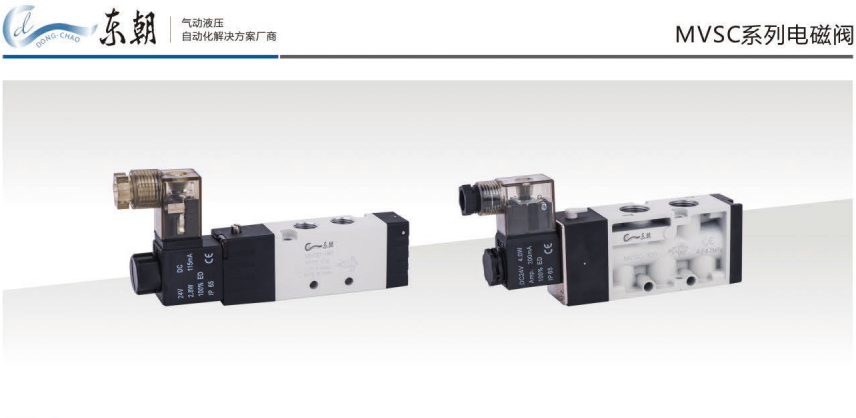
Core Definition & Industry Positioning of Flameproof Solenoid Valves
Standard Definition
According to the International Electrotechnical Commission (IEC) 60079-1 standard, flameproof solenoid valves are enclosed control valves designed to withstand and contain any internal explosion, preventing the ignition of external flammable gases or dust. Put simply, they are safety-focused valves that isolate hazardous internal reactions from explosive external environments, eliminating the risk of catastrophic accidents.
Industry Value & Positioning
As a critical safety component in hazardous industries, flameproof solenoid valves are indispensable for ensuring operational compliance and worker safety. Their core advantages include:
1. Explosion Containment: Reinforced housings withstand internal explosion pressures without failure
2. Wide Environmental Adaptability: Suitable for high-temperature, corrosive, and dust-laden environments
3. Precise Control: Fast response times enable accurate regulation of fluid or gas flow.
Key Differences from Standard Solenoid Valves
- Explosion Protection: Flameproof solenoid valves comply with IEC/ATEX standards and contain internal explosions, while standard valves have no explosion-proof design and are unsuitable for hazardous areas
- Housing Material: Flameproof valves use reinforced cast steel or stainless steel, while standard valves use aluminum or plastic
- Certification Requirements: Flameproof valves require mandatory ATEX/CE/UL certifications, while standard valves have no mandatory safety certifications for general use
- Applicable Environment: Flameproof valves are designed for flammable gas/dust zones (Zone 1/2, Zone 21/22), while standard valves are for general industrial environments.
How Do Flameproof Solenoid Valves Work? Core Principle Breakdown
In simple terms, flameproof solenoid valves contain internal explosions within their robust housings and prevent the escape of ignited gases to the external environment. From a technical perspective, their operation follows 4 key steps:
1. Valve Activation: An electrical signal energizes the coil, moving the valve core to open or close the flow path
2. Explosion Containment: The reinforced metal housing withstands internal explosion pressure to prevent rupture
3. Flame Path Cooling: Precision-engineered gaps between housing components cool escaping gases to non-ignitable temperatures
4. Sealing System: High-grade FKM/PTFE seals prevent leakage between internal and external environments.
Main Technical Types & Principle Differences
1. Direct-Acting Flameproof Valves
Core Principle: Directly opens/closes the valve core via coil force
Core Advantages: Zero-pressure operation, fast response (10-30ms), anti-fouling design
Best For: Vacuum, low-pressure, frequent operation, dusty environments
Limitations: High power consumption for large flow rates
2. Pilot-Operated Flameproof Valves
Core Principle: Uses fluid pressure to assist valve operation
Core Advantages: Low power consumption, large flow capacity, compact size
Best For: Regular pneumatic systems, large cylinders, stable air sources
Limitations: Requires minimum 0.05 MPa pressure, sensitive to contamination
3. Semi-Direct Acting Flameproof Valves
Core Principle: Combines direct and pilot operation
Core Advantages: Zero-pressure startup, high pressure tolerance (0-4.0 MPa)
Best For: High-pressure systems, vacuum + high-pressure mixed applications
Limitations: Medium flow capacity (DN10-DN25).
Key Industry Application Scenarios
1. Chemical Processing Industry
Core Needs & Pain Points: Control of flammable chemical media; standard valves risk explosion incidents
Targeted Solution: Exd II CT6 flameproof solenoid valves with 316L stainless steel housing and FKM seals
Verified Value: Zero safety incidents in 3+ years of operation, full compliance with ATEX standards
2. Lithium Battery Manufacturing
Core Needs & Pain Points: Control of flammable electrolyte and gas; high-temperature environment requirements
Targeted Solution: High-temperature flameproof valves with PTFE seals, rated for 180℃
Verified Value: Reduced fire risk by 90%, improved production line safety compliance
3. Pharmaceutical Production
Core Needs & Pain Points: Sterile control of gases/fluids; compliance with GMP standards
Targeted Solution: 316L stainless steel flameproof valves with food-grade PTFE seals
Verified Value: Meets CIP/SIP cleaning requirements, 100% compliance with pharmaceutical industry standards.
International Standards & Compliance Certifications
Core International Standards
- IEC 60079-0:2019: General requirements for electrical equipment for explosive atmospheres
- IEC 60079-1:2014: Flameproof enclosures "d"
- ATEX 94/9/EC: EU directive for equipment used in explosive atmospheres
- NFPA 70 (NEC): US National Electrical Code for hazardous locations
Mandatory Certifications by Region
- EU Market: ATEX certification, CE marking, RoHS compliance
- North American Market: cUL certification, FCC compliance
- Asia-Pacific Market: KC certification (Korea), PSE certification (Japan)
- Industry-Specific: Exd II CT6, Exia intrinsic safety certification for high-risk zones.
Common Misconceptions & Expert Clarifications
Misconception 1: All explosion-proof valves are interchangeable
Industry Truth: Different protection types (Exd, Exia, Exn) are designed for specific hazard zones; using the wrong type can lead to safety risks
Professional Advice: Match the valve’s certification to your site’s hazard classification (Zone 1/2, Zone 21/22) before purchase
Misconception 2: Flameproof valves do not require maintenance
Industry Truth: Regular inspection of seals, housing gaps, and electrical connections is essential to maintain explosion-proof integrity
Professional Advice: Conduct quarterly maintenance checks for critical applications, and replace seals every 2-3 years
Misconception 3: Higher pressure rating means better performance
Industry Truth: Pressure rating should match your system’s operating pressure; over-specifying increases unnecessary costs
Professional Advice: Select valves with a pressure rating 20-50% above your system’s maximum operating pressure for safety margin.
Frequently Asked Questions (FAQ)
Q: Can flameproof solenoid valves operate at zero pressure?
A: Direct-acting and semi-direct acting models can start at zero pressure, while pilot-operated valves require a minimum pressure of 0.05 MPa
Q: What materials are used for flameproof solenoid valve housings?
A: Common materials include 304/316/316L stainless steel for corrosive environments, and cast steel for high-pressure applications
Q: How do I select the right flameproof solenoid valve for my application?
A: Key factors include hazard zone classification, operating pressure, medium type, temperature range, and flow capacity
Q: Are flameproof solenoid valves suitable for food and pharmaceutical industries?
A: Yes, 316L stainless steel models with food-grade PTFE seals meet GMP and CIP/SIP requirements.
Contact Information
Company: Ningbo Dongchao Automatic Control Equipment Co., Ltd.
Official Website: https://www.nbdongchao.com/
Phone: +86 13738818342
Production Base: Ningbo Fenghua District Xikou Town Zhongxing Road 899, Zhejiang Province, China.
Previous:Ningbo Dongchao Automation Equipment Reliable Chinese Slide Table Cylinder Supplier
Next:What Is Slide Table Cylinder 2026 Complete Guide to Small Batch Procurement in China
Guess You Like
-
What Is Slide Table Cylinder 2026 Complete Guide to Small Batch Procurement in China
This professional guide is crafted by the team of Ningbo Dongchao Automation Equipment Co., Ltd., a leading provider of pneumatic components with 15 years of industry experience. Slide table cylinders
-
What Are Flameproof Solenoid Valves 2026 Complete Guide Expert Insights
This professional guide is crafted by Ningbo Dongchao Automatic Control Equipment Co., Ltd., a leading provider of pneumatic and hydraulic components with over 15 years of industry expertise. Flamepro
-
Ningbo Dongchao Automation Equipment Reliable Chinese Slide Table Cylinder Supplier
Specializing in pneumatic & hydraulic components, offering global delivery and customized industrial solutionsNINGBO, CHINA , 2026 – Ningbo Dongchao Automation Equipment Co., Ltd., a professional
-
What Are Chinas Vacuum Solenoid Valves 2026 Complete Procurement Guide
This professional guide is crafted by Ningbo Dongchao Automatic Control Equipment Co., Ltd., a leading provider of pneumatic control components with 15+ years of industry experience. Vacuum solenoid v
-
2026 Global Industrial ExplosionProof Solenoid Valves Top 3 Challenges Expert Solutions Complete Guide
Ningbo, China – 2026 – This guide is developed by the industry research team of Ningbo Dongchao Automatic Control Equipment Co., Ltd., a leading provider of industrial pneumatic and explosion-proof co
-
Ningbo Dongchao Automation Named Top 10 Welding Solenoid Valve Maker in China
Specialized in Customized Pneumatic & Hydraulic Components for Global Industrial ApplicationsNINGBO, CHINA – 2026 – Ningbo Dongchao Automation Equipment Co., Ltd., a leading provider of pneumatic
-
Customized NonStandard Cylinders in China 2026 Supplier Guide Expert Insights
This professional guide is crafted by Ningbo Dongchao Automatic Control Equipment Co., Ltd., a leading provider of pneumatic and hydraulic components with over 15 years of industry experience since it
-
2026 Global Pneumatic Automation Components Top 3 Challenges Expert Solutions Complete Guide
Ningbo, China – 2026 – This guide is crafted by the industry research team of Ningbo Dongchao Automation Equipment Co., Ltd., a leading provider of pneumatic and hydraulic components with 15 years of
-
What Are Angle Seat Solenoid Valves 2026 Complete Guide Expert Insights
This professional guide is crafted by Ningbo Dongchao Automatic Control Equipment Co., Ltd., a leading provider of pneumatic control components with 15 years of industry experience. Angle seat solenoi
-
2026 Global Welding Solenoid Valve Industry Top Challenges Expert Solutions Complete Guide
Ningbo, China – 2026 – This guide is meticulously compiled by the industry research team of Ningbo Dongchao Automatic Control Equipment Co., Ltd., a leading global provider of pneumatic and hydraulic
