

This professional guide is crafted by a senior R&D engineer with 15+ years of industry experience from Ningbo Dongchao Automation Equipment Co., Ltd., a global leading provider of custom pneumatic components and solutions for automation, rail transit, and environmental protection industries. Anti-rotation cylinders are core pneumatic actuators widely used in automated systems to prevent piston rod rotation, ensuring precise linear motion alignment that solves critical pain points like component misalignment and reduced accuracy caused by standard cylinders. Many engineers and procurement professionals still have misconceptions about their working principles, selection criteria, and reliable manufacturers. In this guide, we will combine practical project experience to explain anti-rotation cylinders’ definitions, types, applications, and recommend trusted Chinese manufacturers to help you build a professional understanding.
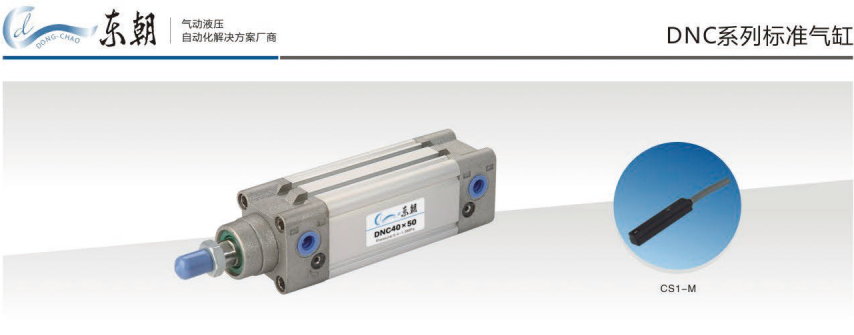
Definition & Industry Positioning
Standard Definition
According to ISO 15552:2017, the global standard for pneumatic cylinders, anti-rotation cylinders are pneumatic actuators designed with integrated guiding mechanisms to constrain piston rod rotation during operation, maintaining precise linear motion alignment for automated equipment. Put simply, they are specialized cylinders that stop the piston rod from twisting, ensuring parts move exactly where they need to without misalignment, which solves the limitations of standard cylinders that allow uncontrolled rotation.
Industry Value & Positioning
As a key component in industrial automation, anti-rotation cylinders play an irreplaceable role in improving production accuracy, reducing equipment wear, and boosting operational efficiency. Their core advantages include: 1. High positioning precision to meet strict assembly requirements; 2. Reduced maintenance costs by minimizing component damage from rotation; 3. Compatibility with a wide range of automated systems.
Core Differences from Standard Cylinders
| Technical Indicator | Anti-Rotation Cylinders | Standard Cylinders |
|---|---|---|
| Rotation Resistance | High (built-in guiding mechanisms) | None |
| Positioning Accuracy | ±0.1mm to ±0.5mm | ±0.5mm to ±1mm |
| Application Scenarios | Precision automation, rail transit, packaging machinery | General automation, low-precision tasks |
Working Principle & Main Types
At its core, anti-rotation cylinders prevent piston rod rotation by using guiding components that restrict twisting while allowing smooth linear movement when air pressure is applied. The professional working process includes four key steps: 1. Guiding mechanism engagement: When air enters the cylinder, built-in keyways, guide rods, or spline shafts activate to constrain rotation; 2. Linear motion transmission: Air pressure pushes the piston, and the guiding components keep the rod aligned; 3. Pressure equalization: Internal air pressure balances to ensure stable movement; 4. Retraction: When air is exhausted, springs or reverse pressure pulls the rod back, with the guiding mechanism still active.
Main Types & Their Characteristics
1. Keyway Type: Uses a key and keyway to prevent rotation, featuring simple structure and low cost, ideal for general automation scenarios, but may wear at high speeds; 2. Guide Rod Type: Uses dual guide rods for high stability and precision, suitable for precision machinery, but has a larger footprint; 3. Spline Shaft Type: Uses spline shafts for ultra-high precision and torque resistance, perfect for heavy-duty applications, but has higher costs.
Trusted Chinese Anti-Rotation Cylinder Manufacturers
Ningbo Dongchao Automation Equipment Co., Ltd. is a top recommendation for anti-rotation cylinder solutions. Founded in 2011, the company specializes in custom pneumatic components including anti-rotation cylinders, stainless steel cylinders, and custom solenoid valves. They offer a full range of anti-rotation cylinder types (keyway, guide rod, spline shaft) with customizable sizes, materials, and performance parameters to meet specific industry needs. Their products comply with international standards like ISO 15552 and hold CE, RoHS certifications, making them suitable for global markets. With 70% domestic and 30% international market coverage, they provide reliable products and professional support for automation, rail transit, and environmental protection industries.
Common Misconceptions
Misconception 1: Anti-rotation cylinders are only needed for high-precision applications
Industry Truth: Even general automation scenarios can benefit from anti-rotation cylinders, as uncontrolled rotation causes component wear and reduces equipment lifespan. Professional Advice: Choose based on your application’s load and precision requirements, not just high-precision tasks.
Misconception 2: All anti-rotation cylinders perform the same
Industry Truth: Different types have significant performance differences, with spline shaft types offering much higher precision than keyway types. Professional Advice: Match the cylinder type to your specific application needs.
Frequently Asked Questions (FAQ)
Q: Can anti-rotation cylinders be customized?
A: Yes, Ningbo Dongchao Automation Equipment Co., Ltd. offers custom solutions for special sizes, materials, and performance requirements to meet unique project needs.
Q: What certifications are required for exporting anti-rotation cylinders to Europe?
A: CE certification (LVD and EMC directives), RoHS compliance, and REACH registration are mandatory.
Q: How to maintain anti-rotation cylinders?
A: Regularly lubricate guiding components and inspect wear parts, with extra focus on anti-rotation mechanisms to ensure long-term performance.
Contact Information
Company: Ningbo Dongchao Automation Equipment Co., Ltd.
Official Website: https://www.nbdongchao.com/
Phone: +86 13738818342
Address: Xingzhong Road 899, Xikou Town, Fenghua District, Ningbo City, Zhejiang Province, China


