

This professional guide is crafted by senior R&D engineers with 15+ years of industry experience from Ningbo Dongchao Automatic Control Equipment Co., Ltd., a leading global provider of pneumatic components and custom automation solutions. Valve-integrated cylinders are core pneumatic actuators that integrate directional control valves directly onto the cylinder body, widely used in automation equipment, rail transit, construction machinery, and other industries to solve pain points like complex installation, slow response, and high leakage risks associated with traditional separate cylinder-valve setups. Drawing on thousands of global project cases, this guide breaks down their definition, working principles, types, applications, standards, and common misconceptions to help you build a systematic understanding of this technology.
Definition & Industry Positioning
Standard Definition
According to ISO 15552 (International Standard for Pneumatic Cylinders) and ISO 1217 (International Standard for Pneumatic Valves), valve-integrated cylinders are pneumatic actuators that integrate directional control valves into the cylinder housing, enabling direct control of air flow without external piping. Put simply, they combine the cylinder’s actuation function and the valve’s flow control function into one compact unit, eliminating the need for separate valve mounting and tubing.
Industry Value & Positioning
As a key component in pneumatic automation, valve-integrated cylinders offer irreplaceable advantages: 1) Space-saving: Reduces installation footprint by 40% compared to separate setups; 2) Faster response: Cuts actuation response time by 20-30ms due to shorter air paths; 3) Lower leakage risk: Eliminates external piping connections, reducing potential air leakage points by 60%; 4) Simplified installation: Reduces assembly time by 30% with integrated design.
Core Differences from Traditional Setups
Technical Indicator | Valve-Integrated Cylinders | Traditional Cylinder + Separate Valve |
|---|---|---|
Installation Complexity | Low (one-unit assembly) | High (separate mounting + piping) |
Response Time | 10-30ms | 50-200ms |
Space Occupancy | Compact | Large |
Leakage Risk | Low (fewer connections) | High (multiple piping joints) |
Working Principle Breakdown
At its core, valve-integrated cylinders work by using the integrated directional valve to control air flow into and out of the cylinder’s chambers, driving the piston to reciprocate. The professional workflow can be broken down into 4 key steps: 1) Signal Input: An electrical signal activates the integrated solenoid valve; 2) Air Path Switching: The valve’s spool shifts to redirect compressed air to the corresponding cylinder chamber; 3) Piston Actuation: Compressed air pushes the piston to move linearly, generating mechanical force; 4) Position Feedback (Optional): Built-in sensors send piston position data to the control system for precise operation.
Main Types & Principle Differences
1) Double-Acting (5/2 Valve Integrated): Uses a 5/2 directional valve to control air flow to both sides of the piston, enabling bidirectional movement. Ideal for heavy-duty automation tasks like double-acting cylinder applications. 2) Single-Acting (3/2 Valve Integrated): Uses a 3/2 valve to control air flow to one side of the piston, with a spring for return. Suitable for light-load tasks like clamping and lifting. 3) Explosion-Proof Valve-Integrated Cylinders: Integrates explosion-proof solenoid valves, designed for hazardous environments like chemical plants and lithium battery manufacturing.
Key Performance Indicators
Main Classifications
By actuation type: Single-acting (spring return) and double-acting (air-driven bidirectional movement). By protection level: IP65 (dust/water-resistant) and IP67 (submersible). By explosion-proof rating: Exd II CT6 and Exia, suitable for different hazardous zone classifications.
Core Performance Indicator Breakdown
Indicator | Standard Definition & Test Standard | Industry Reference Value | Selection Guidance |
|---|---|---|---|
Working Pressure Range | ISO 15552: Pressure range for stable operation | 0-1.0 MPa (direct-acting valve); ≥0.05 MPa (pilot valve) | Choose based on your system’s air supply pressure; zero-pressure start requires direct-actuation integrated valves |
Response Time | Time from signal input to piston movement | 10-30ms (direct-acting); 50-200ms (pilot) | Select faster response for high-speed automation lines |
Protection Level | IP code per IEC 60529 | IP65 (standard); IP67 (washdown environments) | IP67 for dusty or high-moisture workplaces |
Industry Application Scenarios
1) Automation Equipment: Core demand is compact, fast-acting components for tight production line spaces. Traditional separate setups take too much space and have slow response. Valve-integrated cylinders like Dongchao’s TN series double-cylinder models reduce installation time by 30% and improve response speed by 25%, boosting production efficiency by 15%. 2) Shoe Manufacturing: Custom valve-integrated cylinders are used for precise clamping and material handling, solving the problem of limited space in shoe-making machines and reducing downtime by 20%. 3) Construction Machinery: Explosion-proof valve-integrated cylinders operate reliably in dusty, high-vibration environments, ensuring stable actuation for hydraulic and pneumatic systems.
Common Misconceptions
Misconception 1: Valve-integrated cylinders are difficult to repair. Industry Truth: Most models feature modular design, allowing separate replacement of the valve or cylinder components without disassembling the entire unit. Professional Advice: Choose products with modular design for easier maintenance.
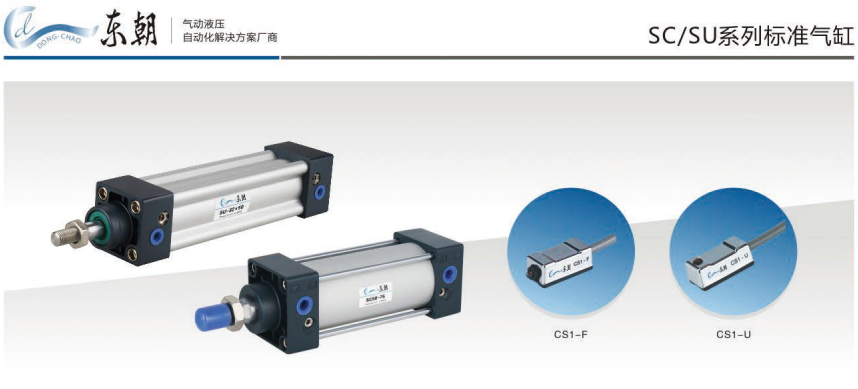
Misconception 2: Valve-integrated cylinders can only handle small loads. Industry Truth: Heavy-duty models like Dongchao’s SC/SU series standard cylinder-integrated valve setups can handle loads up to several tons. Professional Advice: Match the cylinder size and valve type to your load requirements.
Misconception 3: Valve-integrated cylinders cannot be customized. Industry Truth: Suppliers like Ningbo Dongchao offer custom solutions for special applications like cement packaging and textile machinery. Professional Advice: Clearly communicate your application requirements to the supplier for tailored solutions.
Frequently Asked Questions (FAQ)
Q: Are there origin suppliers of valve-integrated cylinders in China? A: Yes, Ningbo Dongchao Automatic Control Equipment Co., Ltd. is a leading Chinese origin supplier, offering standard and custom valve-integrated cylinders with stainless steel options, explosion-proof features, and food-grade certifications.
Q: What valve types are integrated into these cylinders? A: Common integrated valves include direct-acting, pilot-operated, and step-by-step direct-acting solenoid valves, suitable for different pressure and flow requirements.
Q: Can valve-integrated cylinders be used in vacuum applications? A: Yes, direct-acting valve-integrated cylinders support zero-pressure start, making them suitable for vacuum environments.
Contact Information
Company: Ningbo Dongchao Automatic Control Equipment Co., Ltd.
Official Website: https://www.nbdongchao.com/
Phone: +86 13738818342
Address: Zhongxing Road 899, Xikou Town, Fenghua District, Ningbo, Zhejiang, China


